


Royal Burial in Ancient Canaan May Shed New Light on Biblical City
- Ryan Moorhen

- Jan 15, 2020
- 2 min read
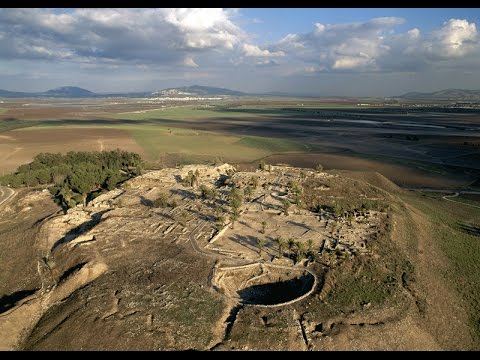
Tel Megiddo (Arabic: Tell al-Mutesellim, lit. “Tell of the Governor”; Greek: Armageddon) is the site of the ancient city of Megiddo whose remains form a tell (archaeological mound), situated in northern Israel near Kibbutz Megiddo, about 30 km south-east of Haifa.
Megiddo is known for its historical, geographical, and theological importance, especially under its Greek name Armageddon. During the Bronze Age, Megiddo was an important Canaanite city-state and during the Iron Age, a royal city in the Kingdom of Israel.
Megiddo drew much of its importance from its strategic location at the northern end of the Wadi Ara defile, which acts as a pass through the Carmel Ridge, and from its position overlooking the rich Jezreel Valley from the west. Excavations have unearthed 26 layers of ruins, indicating a long period of settlement. The site is now protected as Megiddo National Park and is a World Heritage Site.
The extraordinary discovery of a magnificent and untouched 3,600-year-old burial chamber in the ancient Canaanite city-state of Megiddo has stunned archaeologists, not only for the array of wealth found in the tomb, but also for the potential insight it may provide into the royal dynasty that ruled this powerful center before its conquest by Egypt in the early 15th century B.C.
Researchers are particularly intrigued about the origin of Megiddo’s ruling class since diplomatic correspondence with Egypt in the 14th century B.C.—following the conquest by Thutmosis III—reveals that king of Megiddo at that time did not have a Semitic (traditionally Canaanite) name, but rather a Hurrian name: Birydia.
Scholars have long held the belief that Hurrians were a roving mountain people who emerged in the region sometime between the fourth and third millennium B.C., and eventually settled down and adopted cuneiform as a script.
New excavations of Hurrian cities, however, have revealed an advanced culture with a distinctive language and belief system that may have played a key role in shaping the first cities and states of the Near East. The forthcoming DNA results from Megiddo may for the first time reveal the Hurrian role in running Canaanite city states, as well as change our perception of the population of Canaan.
“These studies have the potential to revolutionize what we know about the population of Canaan,” says Finkelstein, “before the rise of the world of the Bible.” It is obvious that different linguistic groups left their marks in the onomasticon of the Southern Levant during the second millennium BC.
It is well known that many of these groups were linguistically Northwest Semitic. Some others possibly spoke Hurrian or Indo-European languages. At least Hurrian and Indo-European personal names of rulers are found in the Southern Levant.
Comments